
How Cool is Cool?: Why the Mod Revival Matters
Post-punk is cool. Everyone agrees. Gang of Four, The Au Pairs—anything with jagged guitars and art-school angst gets the thumbs-up. The more obscure, the better. Even the unlistenable stuff Jon Savage digs up for his compilations has cultural cachet.
But one part of the post-punk era remains resolutely uncool. It’s rarely discussed, never celebrated. Not even Jon Savage will touch it.
I’m talking about the mod revival.
Which is strange, because back then, I never met anyone who called themselves post-punk. That label came later, slapped on a set of wildly different bands who didn’t think of themselves as part of a movement. But I knew plenty of people who were mods. Even in a small place like Durham, there were dozens of us. It was the biggest youth scene I ever saw—bigger than punk, bigger than metal—and the one with the longest shelf life.
Punks and metallers might still play the records, maybe wear a band tee now and then, but mods? Most of us never stopped. We might not still ride scooters or wear fishtail parkas, but the music, the clothes, the attitude—they stayed with us.
And yet, the mod revival is still doesn’t get the love it deserves from music fans.
Which is a shame, because it produced some of the best music of the era. Those bands took the sound of The Who, The Creation, The Kinks, The Small Faces—and gave it a shot of punk energy. That made sense: punk had already borrowed heavily from the original mods. The Sex Pistols covered The Who and Small Faces live. Don Letts, the coolest mad in punk, sold mod suits at Acme Attractions. The Buzzcocks looked like mods, and Why She’s A Girl From The Chainstore could easily be a Purple Hearts B-side.
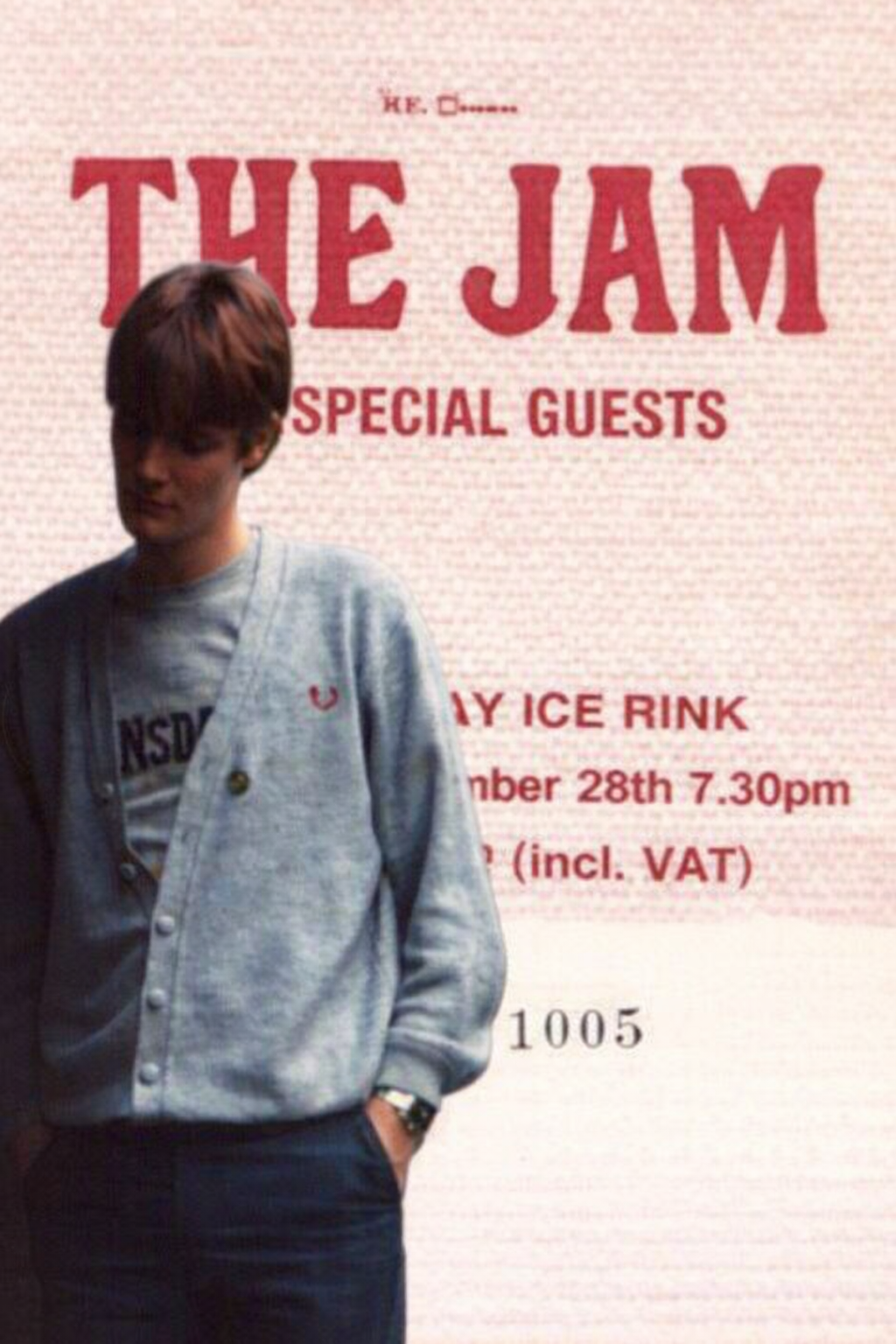
Two things lit the fuse: All Mod Cons by The Jam and Quadrophenia, the movie. All Mod Cons was The Jam’s first masterpiece, the clearest vision of how 60s pop could be filtered through punk and new wave to create something vital. Quadrophenia was the best coming-of-age film ever made—awkward, furious, confused—and it landed like a bomb in the imagination of every working-class kid.
Truth is, mod-influenced music had been bubbling away since punk started to deflate. But “mod revival” was a term lazy journalists used to corral a bunch of bands, some keen to jump on the bandwagon, others trying to escape it.
That’s the central tension with the mod revival: it was never just one thing. Some bands wore the badge proudly. Others recoiled from it.
To make sense of it, I’ve broken it into three waves—based entirely on when I was into them, not on any scholarly system.
- First wave: Born out of punk. The Jam, Secret Affair, Purple Hearts, Squire. A revolt into style
- Second wave: Edging into indie territory. The Prisoners, Makin’ Time, The Truth. Less likely to call themselves mods, but shaped by it.
- Third wave: Mod and Britpop start to blur. Oasis wasn’t a new thing—they were just the latest revival.
Really, the gap between the original mods and the ‘79 revival is so short that “revival” might be the wrong word. Mod has always been more than a trend. It’s an aesthetic, an attitude, a way of being. Each generation reinvents it.
This flies in the face of the English Heritage version of mod: a static scene of ageing parka wearers and scooters preserved in plastic.
For me, mod wasn’t just the music—it was the clothes. A glorious mash-up of vintage finds, tailoring, and sheer invention.
We got what we could. Mail order from the last surviving Carnaby Street boutiques—chiefly Melandi, run by two blokes called Mel and Andy.
Some was scavenged or re-purposed. A corduroy cap from an old man’s clothes shop, a vintage suit from a second hand store. Sometimes we could afford something tailored, or more likely vintage stock that was taken in. My brother worked in a clothes shop and with his wages earned from selling stone washed jeans and Podsto causals he bought some elaborate tailored hipsters. I had a brown tonic mohair suit found in a junk shop that was remade by a tailor my dad knew in Newcastle. I bought a prison issue striped shirt and I pestered my mum to sew buttons onto the collar to make a sharp stripe button down. A cream Mac in the style of Harry Palmer or Paul Weller A Paris came from an aged relative. My dad had a collection of black polo necks he used to wear to impress them ladies while driving his rover SD1 and I would steal them.
We raided Army surplus for parkas and Doc Martens, a treasured a Londsdale t-shirt from the original boxing wear shop off Carnaby street with the raised felt letters. MAIs for riding scooters on a cold day.
Loafers; tasseled or penny, with segs. Oxblood DMs shone with brown polish to give a richer colour. Elaborate cycling shoes in primary colours which today look a bit ridiculous. Jam shoes.
But above all desert boots and bowling shoes. Des boots came from army surplus in tan, bowling shoes were for dancing and going out. Chelsea boots for smart.
Phaze in Durham was upstairs from Volume Records and had all kinds of clothes mainly punk and new wave. I bought a pair of black watch tartan trousers there that I wore with a thin black sweater and I thought I looked boss. A skinny check bum freezer jacket whose checks clashed with the trousers, but I wore anyway. I also bought some black and white striped jeans there that I wore with a black polo neck and big black shoes hoping to look like I had come from Sunset Strip in 1966. I suspect I looked foolish.
Paisley shirts in headache inducing patterns. I bought a new one 10 years ago from Etro in the Quadrilatero made from 1960s dead stock fabric.
Dogs tooth suits so tight they ran the permanent risk of splitting across the crotch like PJ Proby.
A stall in the indoor market that only sold badges and sew on patches. How anyone made a living for that baffled me now, but I still can’t see a jacket without wanting to put some pins in it.
But mod wasn’t just about how you looked—it was who you were with.
The bar at the student union, the weird thrill of colonising a place as fancy as University College in Durham Castle. Bonding over vodka tonics and lager-and-lime. Trying—and failing—to explain to girls why this scene mattered so much. Why life’s frustrations suddenly made sense with the right shirt and the right tune.
Mod night at Klute, with Dominic Cummings on cloakroom duty. All-nighters at the Mayfair after the metallers cleared out. The rowing club disco, underage and carrying your prized single, hoping to bribe the DJ into slotting it between Duran and Spandau. Ripping it out of punks and goths who hadn’t seen the light.
Mod ages well. Punk doesn’t. Old punks look tragic. Goth only works if you’re a willowy aesthete with knife-edge cheekbones. Rockers with t-shirts stretched over beer bellies look sad.
But old mods? Stylish. Distinguished. Timeless.
A few years back I went to a Get Carter preview at the BFI in Newcastle. Among the media types were a few heavier characters—blokes who’d hung around the Pink Flamingo in the 60s, some with scarred knuckles and hard stares. But the suits, the cut, the way they carried themselves—immaculate. You’ve seen that clip of Bill Nighy talking about how to dress? What he’s really saying is: be a mod.
So why does the mod revival get ignored?
Maybe it’s because there was no mystique. Post-punk bands vanished into legend. You never met them. You could imagine them drinking absinthe and reading Baudelaire. The reality? Probably working for DWP and living in a Barratt home.
Punk claimed to be democratic—but those who made it big legged it to LA or New York, putting oceans between themselves and the crowd that got them there.
Mod revival bands didn’t do that. They stuck around. They hung out. They were fans, not just stars. Too accessible. Too normal. None of them OD’d in hotel rooms. They just got on with it—happy, content, still obsessed.
That’s why mod stayed with people. Long after the music stopped, the scene endured. People stayed in touch, even when the scooters got sold and the parkas stashed away.
A magnificent British obsession.
And finally… the music.
The hardest part of writing this was picking the tunes, trying to trace the evolution of the mod revival through a limited number of tracks. I’ve broken them up into 3 waves, but that reflects my own dodgy memories rather than any complex musicology.
I make no apologies for picking the tracks that trigger my memories rather than trying to edit my past to appear cooler than I really am.