
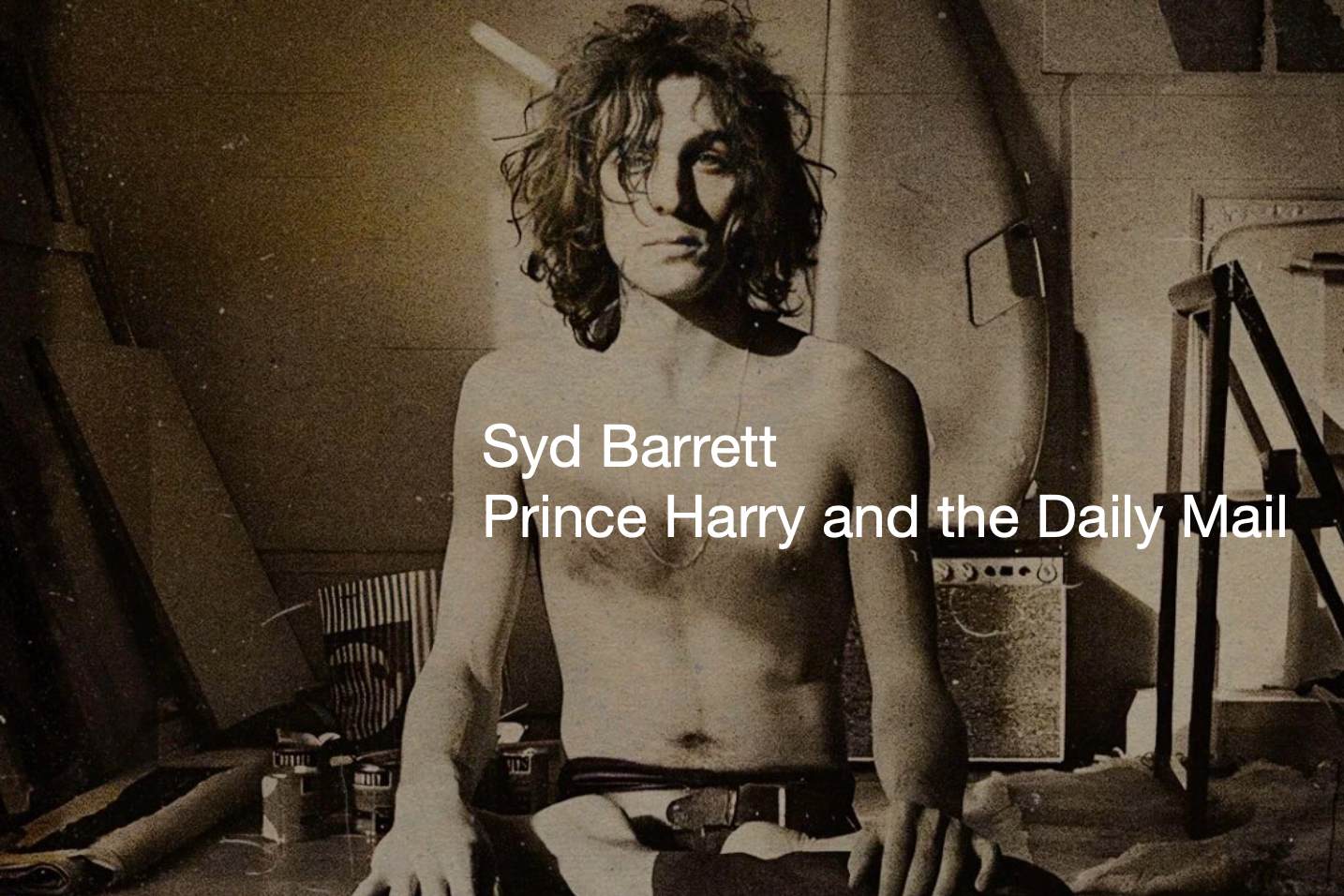
We all know the story of Syd Barrett.
The psychedelic Icarus. Too much LSD. Too much too soon. A brilliant mind that burned itself out.
It’s neat. It’s tragic. It’s also not quite true.
Barrett’s story is usually told as a warning. But look at it properly and something else emerges—something less convenient, and a lot more interesting.
Barrett was born and brought up in Cambridge, and there are signs he may already have been struggling with his mental health before he ever arrived in London. It’s also worth remembering that LSD wasn’t originally a party drug—it was developed as a potential psychiatric treatment. It was supposed to help.
So when Barrett began taking LSD, it may not have immediately broken him. It may even have done the opposite—loosening inhibitions, sharpening his imagination, allowing him to function in a scene where everyone else was experimenting in similar ways. Or perhaps the explanation is simpler: surrounded by people who were all off their heads, he didn’t stand out.
In another life, he might have ended up busking on a street corner. Instead, he found himself at the centre of a band, writing and recording some of the most distinctive music of the decade.
The sound of early Pink Floyd
Listen to those early records and what’s striking isn’t chaos, but control.
Arnold Layne, See Emily Play, Astronomy Domine—these aren’t the shapeless ramblings of someone losing their grip. They are tightly constructed, melodic, often playful songs that sit somewhere between English whimsy and something far stranger. There’s music hall in there, Lewis Carroll, a touch of the avant-garde—but always anchored by an instinct for pop. This is the Pink Floyd I loved, not the bloated prog boredom of the mid 70s.
The Piper at the Gates of Dawn doesn’t sound like the work of a band dissolving. It sounds like someone with a very clear, very original vision.
And that’s the point. Barrett wasn’t just part of Pink Floyd—he was Pink Floyd.
1967: music, politics, and moral panic
As Pink Floyd were emerging, Britain itself was shifting. The Home Office, under Roy Jenkins, was moving towards the decriminalisation of homosexuality, following the Wolfenden Report. The legislation that would become the Sexual Offences Act 1967 was working its way through Parliament.
The Daily Mail were ferociously opposed. They ran a loud, moralising campaign about the supposed collapse of decency.
And into that atmosphere came Arnold Layne.
“I’m pretty sure we all know the opening line: Arnold Layne had a strange hobby…”
The Daily Mail took offence—and not entirely without reason. Barrett’s song about a man stealing women’s clothes felt like a pointed jab at the gap between public morality and private behaviour. Pink Floyd were quickly labelled the “kinky Pinkies”, and the song was banned by some radio stations.
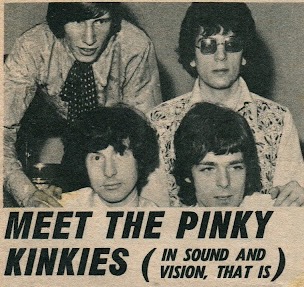
The hostility started early, and it stuck.
The familiar story—and the one we ignore
Then, of course, 1968.
Barrett took more drugs. His mental health deteriorated. During the recording of A Saucerful of Secrets, he was edged out of the band and replaced by David Gilmour Alongside Roger Waters, Gilmour would take Pink Floyd in a very different direction.
At this point, the story usually writes itself: the lost genius, the descent, the inevitable tragic end.
Except that isn’t what happened.
Barrett went home to Cambridge. He stopped making music. He stopped taking drugs. He received treatment. Thanks to Pink Floyd’s success, he was financially secure. He lived quietly, privately, and—by most accounts—peacefully.
It’s not a dramatic ending. It doesn’t fit the mythology. But it is, in its own way, a better one. He didn’t die of an overdose, and lived his life quietly.
The story the press preferred
The problem is that this version of events is no use if you’re trying to construct a morality tale.
The press—particularly the Daily Mail—preferred the narrative of decline. The cautionary tale of excess. The idea that the 1960s produced not creativity, but collapse.
So they kept going.
Reporters and photographers were sent to Cambridge to track him down. They waited outside his house, followed him through the streets, and tried to capture images of a balding, heavier man on a bicycle. Proof that the beautiful, doomed figure had become something ordinary.
It was harassment. A mentally unwell man, living quietly, pursued for the sake of a cheap headline.
And if that feels familiar, it should.
From Barrett in Cambridge to Prince Harry and Meghan Markle today, the methods don’t change. The targets do, the tone shifts, but the instinct is the same: intrusion, distortion, and outrage as a business model. Prince Harry, Elton John and Doreen Lawrence are among the seven claimants in the 10-week, multimillion pound case against The Daily Mail this week for illegal news gathering methods. These scandals have gone on for decades, the press bullying and spying on people and getting away with it due to their political influence. Barrett was never a political pop star, just someone caught in the crossfire of Britains first culture war.
The Daily Mail never really got over Arnold Layne. And, as ever, it says more about them than it does about the people they chase.
Non aucune trace de troubles mentaux avant la célébrité seulement beaucoup de joie anormale sûrement la sur adaptation d’un très haut QI avec autisme a lâché d’ou que Syd plantait volontairement un morceau en répétition car il ne voulait plus être un produit de l’industrie. Il a tué Syd et a retrouvé Roger . Aucune trace non plus de traitement ni d’hospitalisation de même il est rentré chez sa mère 10 ans après la rupture. Y’avait bien la rumeur qu’il savait ce qu’il faisait et c’était bien vu .